Hirodai Ambassador Activity Report (Activity report from study abroad)
Takara Tsuji, 4th year student, Faculty of Humanities and Social Sciences
[Study Abroad First] National Pingtung University (Taiwan)
[Study Abroad Period] October 2026 to July 2026
[Types of Study Abroad] Long-term study abroad at a partner university
I am currently an exchange student at National Pingtung University in Taiwan. More than three months have passed since I arrived, and now that the semester is ending, I'm swamped with exams and reports. This time, I'd like to introduce the classes I'm taking this semester.
At Pingtung University, exchange students can take any courses they want, regardless of their major. I mainly took courses in Chinese, my own major, and the Japanese Department.
First, regarding the Chinese language classes. This semester, there is one beginner and one intermediate class per week. While students are generally expected to choose one or the other, I wanted to take as many Chinese language classes as possible, so I enrolled in both.
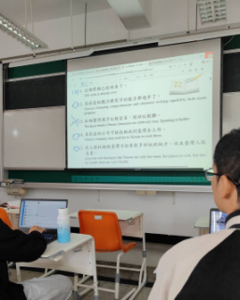
Scenes from a Chinese language class
Most of my classmates were from Southeast Asia, such as Vietnam and Thailand, and I was the only Japanese student. Their Chinese language levels varied; some couldn't speak at all, while others were very fluent. The teacher was very kind and asked if we had any questions after each class, so we could ask questions immediately if we didn't understand something. The atmosphere was great, and the classes proceeded very smoothly.
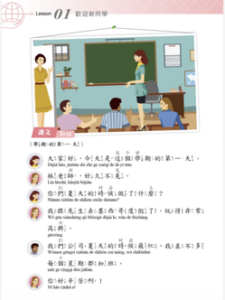
Textbooks being used
Next, let's talk about the courses I take in my faculty. I belong to the Department of Cultural and Creative Industries, and I am taking two courses from this department.
All classes are conducted in Chinese, and I'm the only international student; all the other students are Taiwanese. Because of this, I couldn't understand anything the teacher was saying at first, but the teacher and my classmates are very kind and provide supplementary explanations in English and simple Chinese, so I'm managing to keep up.
I'm also taking classes in the Japanese language department. These classes are designed for Taiwanese students, so the content is very easy for me as a Japanese person, but I decided to take them because I want to make Taiwanese friends with whom I can exchange languages.
They are actually interested in Japan and are learning Japanese, so I think it's relatively easy to make friends with them. However, their Japanese is very good, so I often end up using Japanese when we communicate. Therefore, I try to consciously use Chinese as much as possible when we talk.
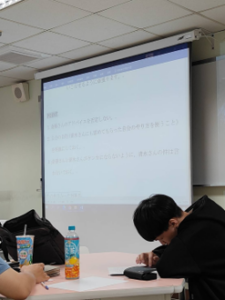
A scene from a Japanese language class.
In addition to these classes, you can also take classes at the Chinese Language Center for an additional fee.
The cost is 27,000 Taiwanese dollars (approximately 135,000 yen) per semester, which is relatively reasonable compared to Chinese language centers at other universities. I didn't take the course due to scheduling conflicts with other classes, but since Pingtung University doesn't have many Chinese language courses for international students, I think it's worth taking if you want to improve your Chinese language skills.
Finally, I will describe the differences I noticed between this university and Japanese universities.
留学にきてまず驚いたのは、授業時間の長さです。屏東大学では、1コマ50分の授業が2コマもしくは3コマ連続する形式になっています。そのため、1つの授業を履修すると最大で3時間連続で同じ授業を受けなければならず、慣れるまでは少し大変でした。
Another big difference is that some students eat during class. It's unthinkable in Japan, so I was surprised at first, but now I also eat lunch during classes.
In the next issue, I'd like to introduce you to the food culture in Pingtung.
Please also see this...What is a Hirodai Ambassador?